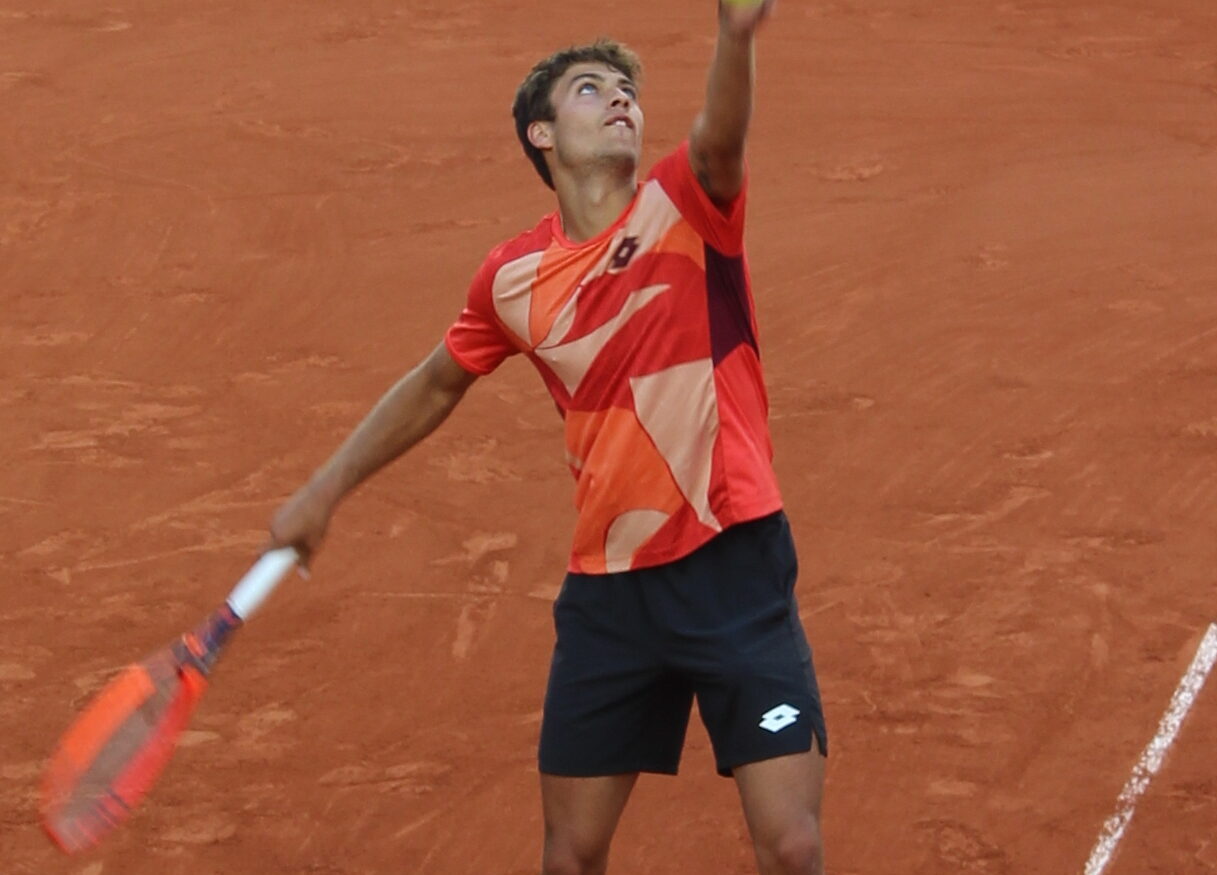
Flavio Cobolli (Italy, world No. 13) has become a dominant force to start the 2026 ATP season.
The 23 year-old opened his Monte Carlo campaign with a 7-5, 2-6, 6-3 win over Francisco Comesaña (Argentina, world No. 87), advancing after a match that required sustained adjustment across three sets.
Cobolli regained control early in the third set, breaking to take the lead and managing the remainder of the match without allowing momentum to shift again. That sequence has been the most consistent indicator of his level this season, particularly his ability to recover immediately after a drop in performance.
His ranking reflects that progression. Cobolli enters the tournament at a career-high world No. 13 and as the No. 10 seed.
The most relevant result remains his ATP 500 title in Acapulco, where he defeated Frances Tiafoe (USA, world No. 18) 7-6(4), 6-4 in the final. That run required five consecutive wins and included multiple service games under pressure where he maintained control.
From a surface perspective, his profile translates effectively to clay. Cobolli is comfortable extending rallies, maintains depth off both wings, and does not rely on first-strike tennis to hold serve. His point construction allows him to sustain longer exchanges without a significant drop in consistency. He now faces Alexander Blockx (Belgium, world No. 91) in the second round.
Blockx arrives through qualifying and has already produced a notable result in the draw, defeating Denis Shapovalov (Canada, world No. 38) in three sets to reach this stage.
Cobolli has the advantage in baseline control, rally tolerance, and experience against higher-level opposition. Blockx, however, enters with momentum, holding a 19–7 record in 2026 and a positive win rate on clay this season.
For Cobolli, the expectation is to control the match from the baseline and limit unforced errors in extended rallies. Matches this season have shown that when he establishes depth early, he is able to dictate tempo and avoid defensive positioning.
The evaluation point comes when the level increases. Against opponents capable of sustaining both pace and consistency, Cobolli has not consistently taken control of matches. That remains the primary variable as the tournament progresses.
The opening win confirmed his current level.The next round will determine whether that level holds against an opponent arriving with form and confidence.