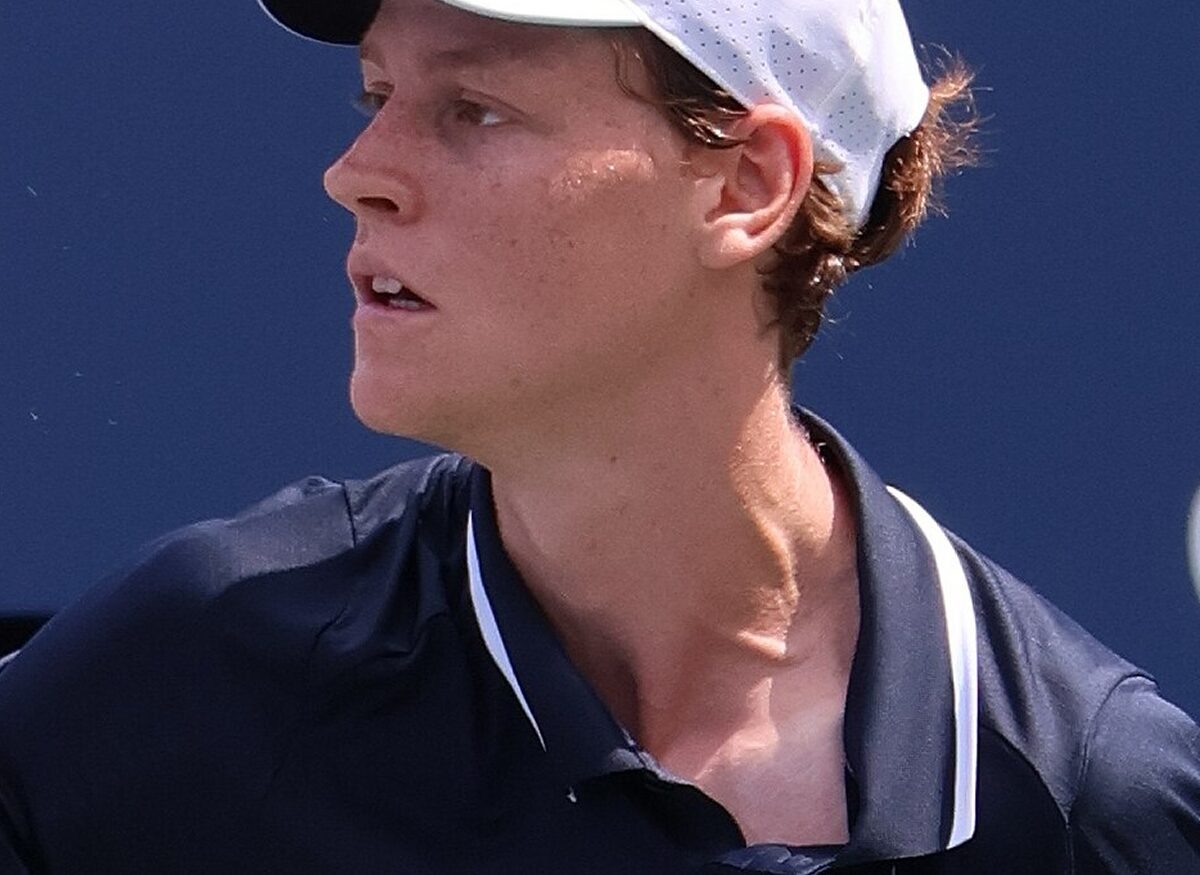
Photograph per Wikipedia/Creative Commons.
Jannik Sinner (Italy, world No. 2, 12,410 points) enters Monte Carlo in the strongest form on tour, with the No. 1 ranking now within immediate reach.
After completing the Sunshine Double by winning both Indian Wells and Miami without dropping a set, Sinner has reduced the gap to Carlos Alcaraz (Spain, world No. 1, 12,600 points) to just 190 points entering the tournament. The structure of the rankings makes this event critical, as Sinner has no points to defend in Monte Carlo while Alcaraz is defending 1000 points as the reigning champion, creating a direct opportunity for a ranking change based solely on performance across the week.
The form behind that position has been defined by efficiency and control. Across both Masters events, Sinner maintained baseline consistency without being forced into extended recovery situations, closing matches in straight sets and limiting momentum swings. His wins over Daniil Medvedev (Russia, world No. 10) and Jiří Lehečka (Czechia, world No. 14) reflected a level where service games remained stable and return pressure was applied without overextending rallies.
The transition to clay shifts the evaluation into a more specific context, particularly in relation to Alcaraz. During the 2025 clay season, Sinner reached both the Rome Masters final and the Roland Garros final, losing to Alcaraz in both matches. In Rome, Alcaraz controlled the match after a competitive opening set, while in Paris, Sinner built a two-set lead before being pulled into longer exchanges and ultimately losing in five sets. Those results established that Sinner’s level on clay is strong enough to reach the final stages of the biggest events, but that Alcaraz has maintained the edge in extended rallies and critical moments.
That dynamic is central entering Monte Carlo. Sinner’s game is built on controlled baseline exchanges, early ball striking, and minimizing unforced errors, which has translated into dominance on hard courts. On clay, where rallies extend and variation becomes more important, the margins narrow, and his ability to maintain depth and patience across longer exchanges becomes the determining factor against top opponents.
The ranking context adds weight to every round. With only 190 points separating him from Alcaraz and a favorable points structure ahead through the early clay season, Sinner enters a stretch where consistent deep runs can shift the balance at the top of the rankings. A stronger result than Alcaraz this week is sufficient to take the No. 1 position, which places immediate competitive pressure on both players throughout the draw.
Monte Carlo represents the first test of whether his current level can translate across surfaces without decline.
His form has already established him as the most consistent player in the field entering the tournament, and the outcome will depend on whether that consistency holds under the longer, more physically demanding conditions that define clay-court play.