Photograph per Wikipedia Commons.
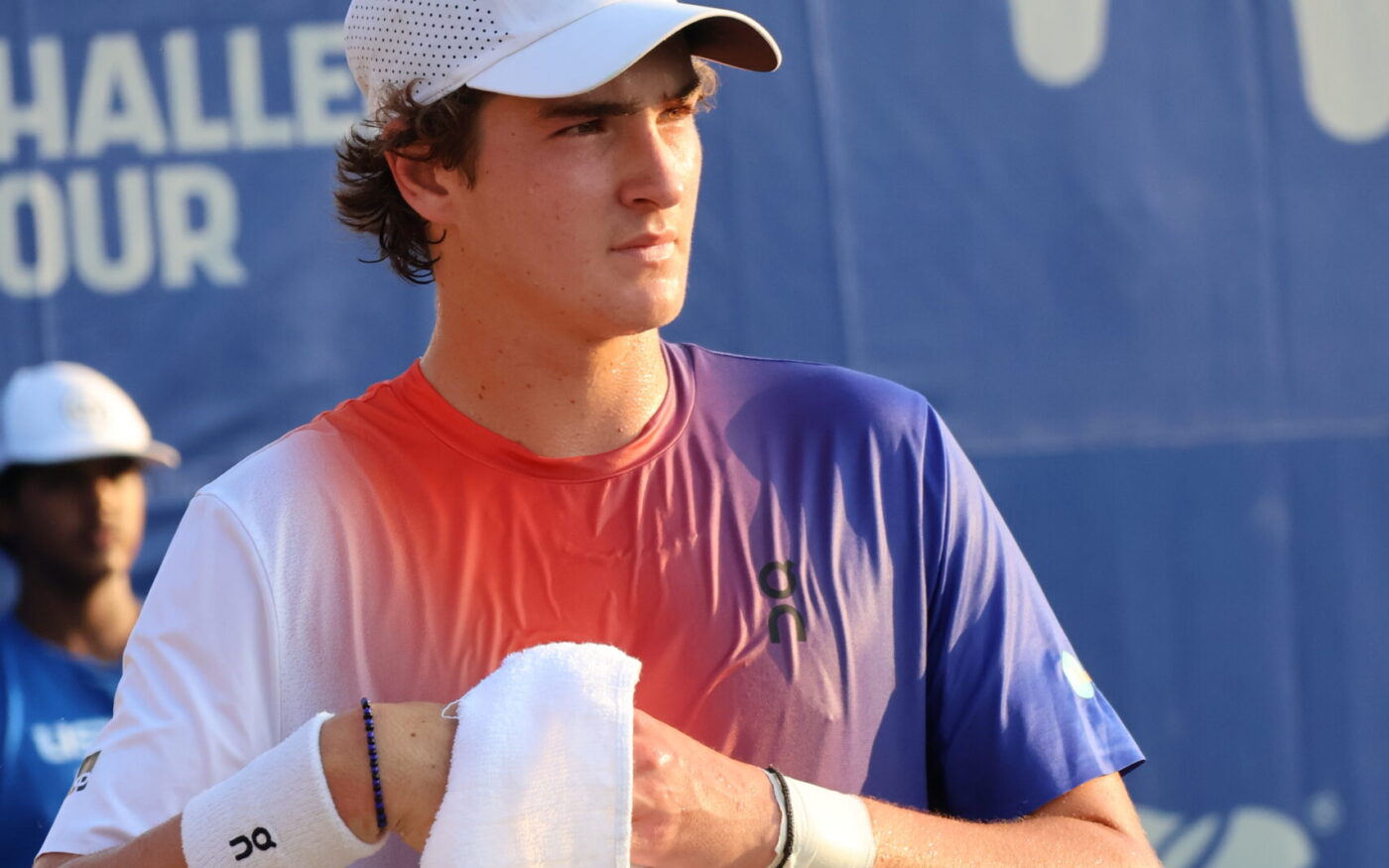
João Fonseca (Brazil, world No. 40) opened his Monte Carlo campaign against Gabriel Diallo (Canada, world No. 36) in the first round, marking his first appearance at the tournament.
The matchup reflects where the 19-year old phenom currently stands.
He enters the clay season with a 5–5 record in 2026, but the results do not fully capture his level. His most relevant performance came at Indian Wells, where he reached the Round of 16 and pushed Jannik Sinner (Italy, world No. 2) to two tiebreak sets in a match defined by sustained baseline exchanges.
That performance established his ceiling.
Fonseca showed he can hold rally tolerance against top-level players and generate pace without breaking down over extended points. His forehand remains his primary weapon, but the more important development has been his ability to stay neutral in rallies rather than forcing early errors.
The transition to clay is significant.
Unlike faster surfaces, Monte Carlo rewards players who can maintain depth and consistency over longer points. Fonseca’s game profile fits that requirement. He does not rely on short points and has already demonstrated the ability to extend rallies against top-10 opposition.
The Diallo matchup provides a controlled entry point.
Diallo’s game is built around serve and first-strike patterns. On clay, those patterns are less effective, which shifts the advantage toward players who can extend rallies and control baseline positioning. That favors Fonseca if he establishes depth early in points.
The key variable is still consistency.
Fonseca has shown he can compete at a high level in individual matches, but he has not yet sustained that level across multiple rounds in a Masters event. That remains the difference between a strong performance and a deep run.
Monte Carlo represents the first opportunity to test that progression on clay.
The opening match set a high standard for Fonseca, who looks to have a loud stretch of months leading up to his 20th birthday.